

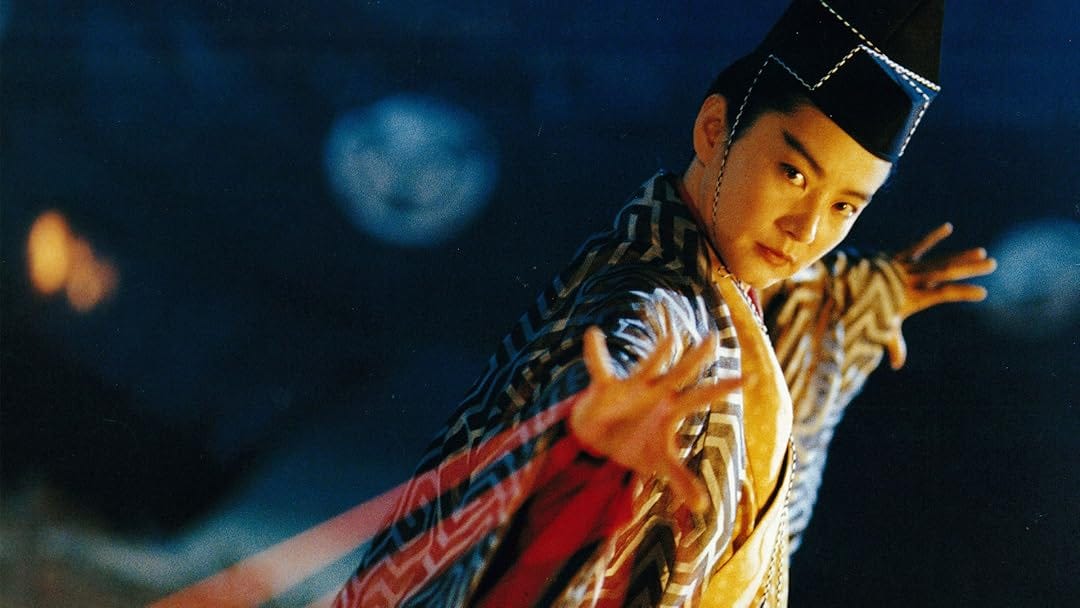
Webster University’s film series offers the rare opportunity to watch the three 1990s wuxia films—”Swordsman,” “Swordsman II,” and “Swordsman III” (aka “The East Is Red”)—on successive days: April 24, 25, and 26. Alternating extensive, amusing banter with inspired swordplay and flying combatants, each features multiple factions vying for dominance in sixteenth century China.
“Swordsman I” begins with title cards asking, “Is it not in every hero’s heart to want to become the one true hero amongst heroes?” With this guiding tenet, during the Wanli era of the Ming Dynasty, the intrigue will begin with the sacred martial arts guidebook, the Chrysanthemum Manual, stolen from the Imperial Library. Based on the original novel by Jin Yong (the pen name of Louis Cha), Ling Wu Chung (Samuel Hui) from the Huashan Sect, travels with his sister Yue Lingshan (Cecilia Yip), disguised as a man and often called Little Brat. Punctuating their frequent banter, these two will cross swords with representatives of the Sun Moon Sect, among many others seeking the prized manual. Known for their swordsmanship, the siblings are reportedly able to retrieve objects from a distance, pass through walls, and unleash their power from a thousand miles away. The Miao tribe, the smallest of sex tribes, will soon factor in as will an old master amidst relentless chaos and unremitting conflict. Silly, slapstick scenes alternate with serious commentary as action incorporates fanciful and surreal elements, all in pursuit of the treasured manual.
Complicating the multiple skirmishes in the twenty-second year of the Wanli reign, “Swordsman II” finds civil war among Japanese generals triggering clashes between the Sun Moon Sect and ronin. Ling Wu Chung and Little Brat continue their escapades, though they express a desire to retreat from the martial arts world where, as Little Brat says, “Fear reigns. Fighting and death are everywhere.” The subsequent battles, in which they will participate, however reluctantly, proves the accuracy of that assertion. Facing off against the Japanese generals who have abandoned their land, declaring Han time over, and continuing to praise the brilliance of the Chrysanthemum Manual, the Huashan Sect will engage in chaotic combat punctuated by comical interaction. As Ling Wu Chung, the great Jet Li will validate his martial arts expertise, pairing with a resilient, impressive Brigitte Lin who shines in every one of her scenes.
In “Swordsman III,” also known as “The East Is Red,” the saga continues nonstop, racing through battling clans of diverse countries. Jumping immediately into a crisis in the opening seconds, Chief Invincible Dawn (also known as Dongfang Bubai and played by a luminous Brigitte Lin) learns that “the Imperial court is allied with the Dutch Navy. They’re attacking us.” And with that announcement, intense, wild wuxia action begins. Canons, grappling hooks, warships, 30,000 troops transferred for assault, schooners, and even a submarine will clash in cyclical encounters. The Sun Moon Sect must, yet again, resourcefully defend itself against foreign invaders seeking to conquer them. Meantime, Ren Wo Xing leads Han experts in an attack on Black Cliff. Airborne fighters, flying arrows and hurtling cauldrons, exploding concrete, collapsing towers, spurting blood, and even more mayhem portend disastrous times for the twenty-third year of the Wanli reign of the Ming Dynasty. Dutch angle shots, dazzling compositions, and rapid fire editing deliver all this even before the titles conclude.
Soon, the Spanish march in, clueless about the “lightning technique of the martial arts world” as well as all features of the mysterious world of souls and evil spirits. Japanese ronin won’t be far behind, but more perplexing are all the Invincible Dawn imposters, all egotistically motivated by the desire for power and wealth. Violent combat alternates with singing and dancing, music and bloody battles. The cherished Chrysanthemum Manual has not been forgotten as warships vie for dominance.
All of these three “Swordsman” films move quickly with complicated narratives, numerous subplots, and multiple, varied locations. Of note, in “Swordsman II and Swordsman III” cinematographer Tom Lau’s camera work perfectly complements the martial arts action. Zooms, quick pans, canted angles, and dizzying images add energy. For balance, occasional close-ups convey emotional connections. Throughout all three films, the art direction, vividly colored costumes, and stunning locations are masterfully integrated without distracting from superbly choreographed martial arts displays. The three “Swordsman” films as a whole offer a breathtaking, nonstop indulgence in the joy wuxia films have delivered for decades. All are in Cantonese with English subtitles and will screen as follows: “Swordsman I” Friday, April 24; “Swordsman II” Saturday, April 25; and “Swordsman III: The East Is Red” Sunday, April 26. All screen at Webster University’s Winifred Moore auditorium at 7:30 p.m. each of those evenings. For more information, you may visit the film series website at: Webster.edu/filmseries.