

From the prestigious 1989 Cannes Film Festival Palme d’Or for “sex, lies, and videotape” (his first feature) to a Best Director Academy Award for his 2001 “Traffic,” from “Kimi” (2022) to “Presence,” (2024), director Steven Soderbergh delights in adopting a familiar genre and then transforming it just enough to surprise and delight viewers. Characteristically, then, he positions "Black Bag" in the spy category, adding a unique twist: the entangled agents are husband and wife, George Woodhouse and Kathryn St. Jean. As usual with cloak-and-dagger intrigue, the principal elite intelligence agent, George, must flush out a mole, here one embedded in Britain's National Cyber Security Center (the NCSC). That individual could be Kathryn, a prime suspect.
Adding anxiety, the plot capitalizes on the NCSC’s focus on technology as opposed to MI5’s and MI6’s concern with human agents (think MI6 for James Bond). Typical of world-ending crises, the looming threat involves a catastrophic cybersecurity worm dubbed Severus that incapacitates a nuclear facility’s safeguards. Decades ago the iconic Alfred Hitchcock waxed poetic about a film’s MacGuffin, that is, the idea or device that propels the plot but doesn’t significantly matter in the final analysis. Severus serves that function, based on the worm Stuxnet that did destabilize components in Iran’s nuclear structure (per press notes). In addition, given the many genuine, everyday security attacks, it might have figured prominently as events progressed. However, the real fun in “Black Bag” comes from watching Cate Blanchett as Kathryn and Michael Fassbender as George sink their teeth into layers of deception, confrontation, and betrayal. They clearly enjoy the game as much as the victory, however it might be achieved.
As the convoluted plot develops, the NCSC identifies five suspects for George to investigate. They include his wife and four colleagues who are also friends, all with access to highly classified, dangerous knowledge. An early dinner scene with all six central characters seated in close proximity around a table introduces subterfuge in a game rigged by George’s truth-inducing potion. George’s manipulative charade, meant to discover secrets, backfires as operatives’ intertwined lives shifts emotional reactions to sensitive, intimate issues. The array of complex characters makes the less than festive meal as fascinating as it is revealing of personalities, their weaknesses and strengths that will guide further interrogation on full display.
According to press notes, writer David Koepp pursued the idea to foreground intelligence operatives’ personal lives as a result of interviews conducted with real agents for the “Mission: Impossible” franchise. From one of those exchanges, Koepp acquired one of “Black Bag’s” best lines. “When you can lie about everything, how do you tell the truth about anything?” Indeed, the search for the truth becomes exceedingly complicated as George’s inquiry intensifies. Ambiguity dominates; suspense increases.
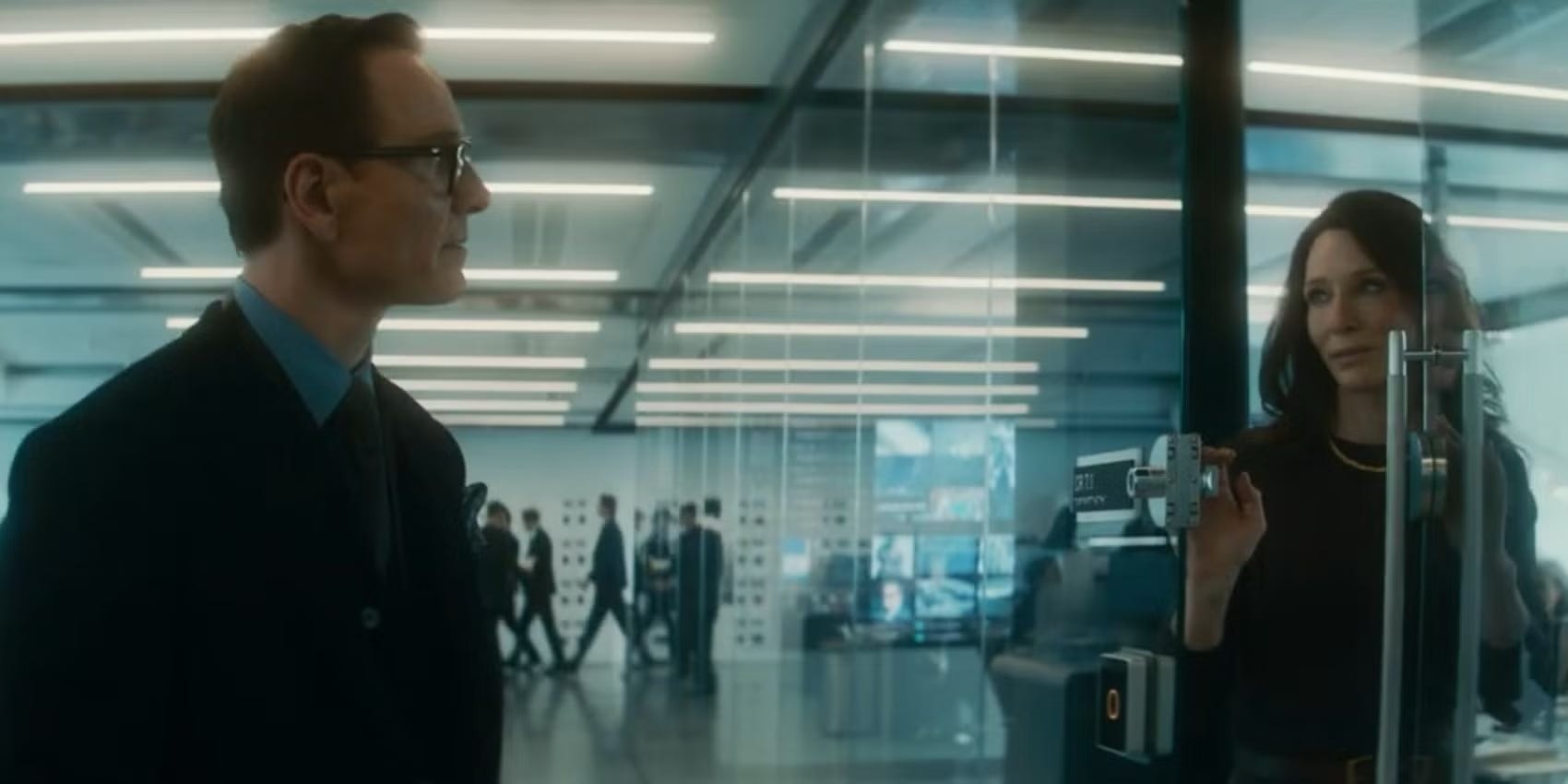
Technically, supervising art director Adam Squires designs several office locations with a lot of glass. Ironically, the truth remains obscured. By contrast, more appropriate to the hidden facts, other interactions are staged in dimly lit rooms or even shadow-shrouded locations. Metaphors also factor into the action. George heads to a lake to fish for bass and, as he says, “to clear his head.” He pointedly tells a colleague that “when you get a hit, you let it run.” The question might be, “Who is in charge?” The title comes from the response “black bag” to any question an agent chooses not to answer, meaning “I can’t talk about that.” It’s a perfect cover for secrets, and Kathryn and George guard many, even as they protect themselves. “Black Bag” is streaming now on Peacock Premium..