

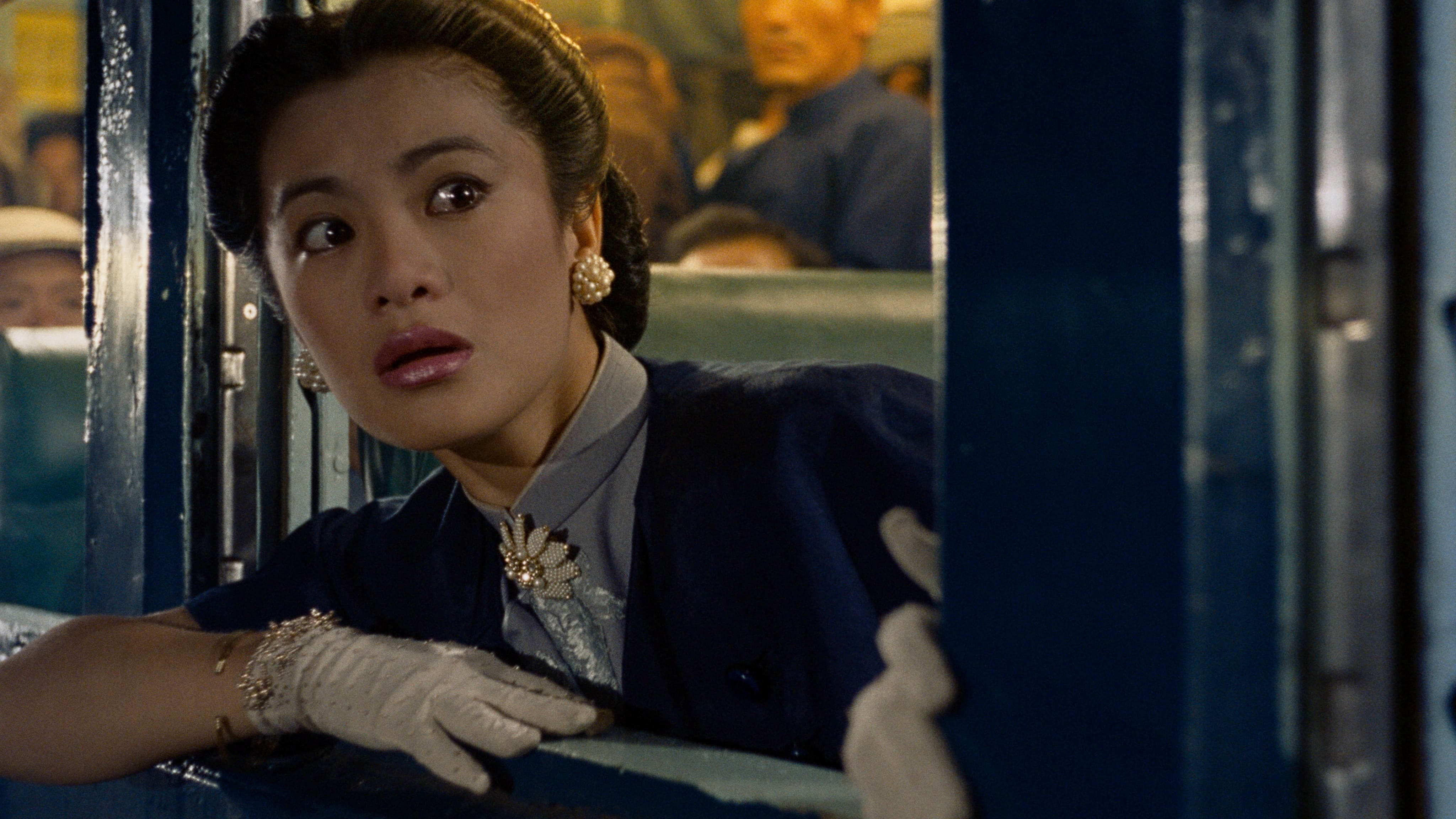
Lovers of unabashed slapstick will welcome “Shanghai Blues,” director Tsui Hark’s 1984 celebration of physical craziness now honored after forty years in a 4K restoration. The grim historical backdrop of the 1937 Japanese invasion of Shanghai adds a surprisingly nuanced context to the riotous antics of the central characters. They are the Chinese army soldier Tung who meets Shu-Shu in pitch darkness under Suzhou Bridge where both take shelter during an air raid. Promising to reconnect as soon as possible, ten years pass.
Called Do-Re-Mi because of his enduring dream to succeed as a songwriter, Tung works first as a clown in a local nightclub and later as a tuba musician, though he fails to keep the tuba under control in amusing buffoonery. Meantime, Shu-Shu has transformed into a glamorous, celebrated cabaret singer, so alluring that big-time Mr. To pursues her despite Shu-Shu’s repeated rejection. All of this exists to highlight the crazy world on display with flashes of substantive subtext given dire postwar conditions. Tsui Hark expertly intersperses serious details without diluting rowdy, boisterous horseplay; for example, incidents acknowledge post-war poverty and hunger and include a homeless veterans’ camp.
Never losing the comic through line, following genre conventions of an inspired screwball comedy, Tung and Shu-Shu live in apartments in the same building, leading to numerous awkward and humorous confrontations. Further complicating their eventual recognition of each other as their sought-after love, Stool, a young woman who has moved to Shanghai from the country to search for relatives, is enamored of Tung, adding romantic complications amidst an abundance of diverting skirmishes. Scenes of crowded streets and alleys, boisterous night clubs with musical performances, and cultural conflict—all this adds texture to the dominant physical scuffles: pratfall after pratfall, hiding in and out of closets, falling over furniture, breaking objects, and even finding oneself in bed with the wrong person during a blackout.
Overall, “Shanghai Blues” honors the tradition of love-crossed Shakespearean comedies, Restoration dramas, and 1930s Hollywood screwball classics. It succeeds because of the no-holds-barred, brilliant physical performances of Sylvia Chang as Shu-Shu, Kenny Bee as Tung, and Sally Yeh as Stool. In addition, the art direction and vibrant colors perfectly complement the uninhibited clowning.
In a touching honor, the film is dedicated to the “Memory of Our Beloved James Wong,” known also as Wong Tung Jim or James Wong Howe, an illustrious cinematographer of more than 130 films from the 1920s to 1975. In a 4K restoration overseen by director Tsui Hark and producer Nansun Shi, in Mandarin, Shanghainese, and Cantonese, all with English subtitles, “Shanghai Blues” screens at Webster University’s Winifred Moore auditorium Friday, July 11, through Sunday, July 13, at 7:30 p.m. each of those evenings. For more information, you may visit the film series website.