

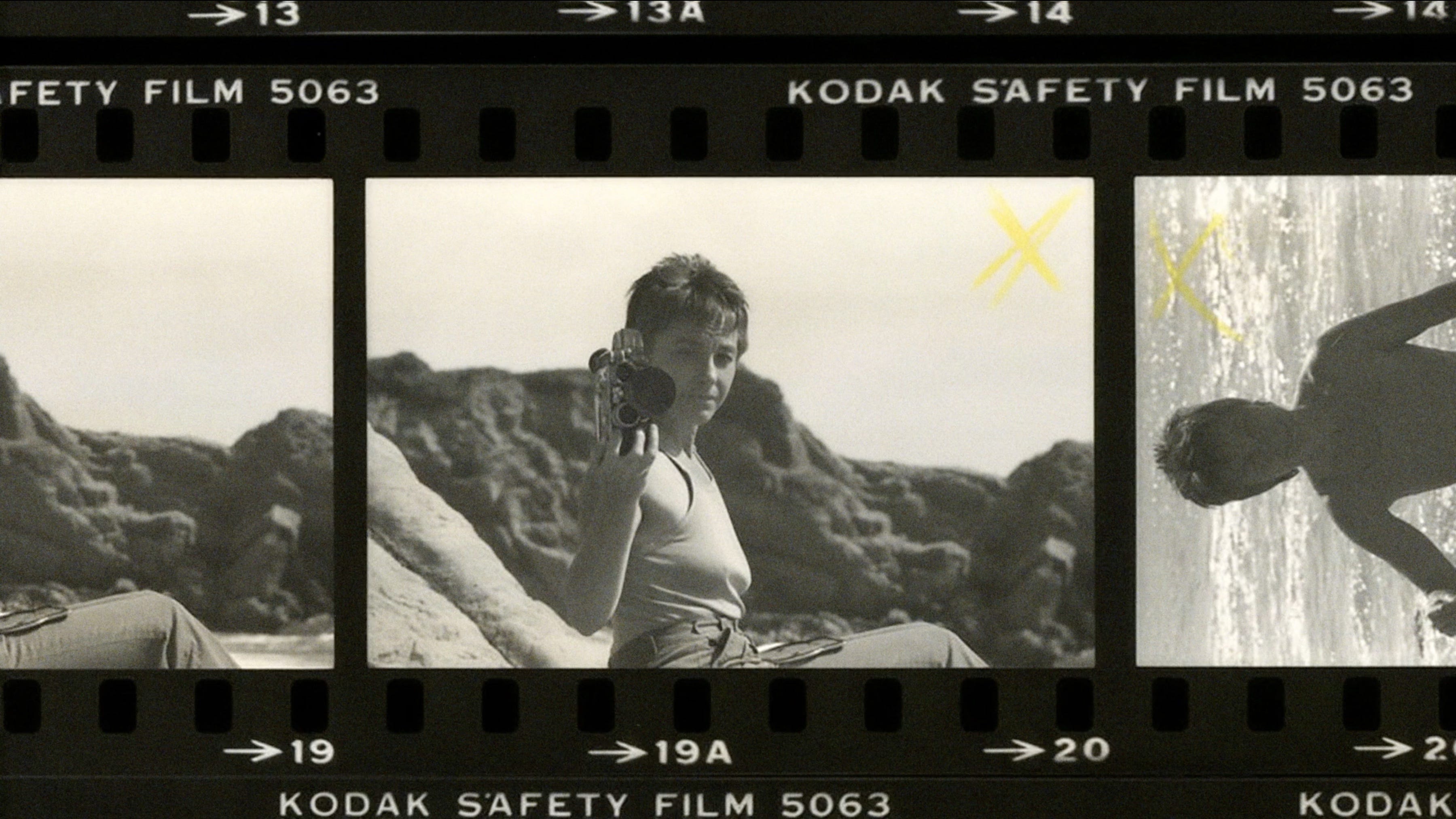
A groundbreaking American lesbian filmmaker, born in 1939 in L.A., Barbara Hammer proudly, explicitly presents and performs her personal life and ideas in over 90 films, installations, photographs, and collages beginning in 1974. Through an archival treasure trove housed at Yale’s Beinecke Rare Book and Manuscript Library and unrestricted access to Hammer’s numerous, mostly short, films, director Brydie O’Connor’s “Barbara Forever” documents in depth what Hammer herself describes as “my own life put on the screen.” Moreover, through her single-minded, always creative work, Hammer proudly asserts, “I’m creating a lesbian history in a world where we’re invisible,” certain that “a lesbian film is not going to follow a traditional story.” With that conviction in mind, she aims to open “the space for queerness to be there and a way of being that isn’t following rules.” Moreover, she adds that “since we were experimenting with our lives, we should have experimental film.” And to the end, Hammer devoted enormous energy and tenacious talent.
Given her guiding principles, Hammer would delight in “Hammer Forever” since, as she maintains, “I want to have something to offer and I want to exist forever,” hence O’Connor’s title. As Hammer believes, her awareness of her feminist personhood and lesbian identity came accidentally. Thirty years old, married to Clayton Henry Ward, she was living in Northern California’s Sonoma County, “getting stuck in a housewife role,” when she heard a Berkeley radio show’s critique of the Miss America contest. Lights went on, and she immediately knew her path forward differed from her current one. As she pronounces in “Barbara Forever,” “I wanted to express who I was . . . and I gave in to it.” Curious and adventurous, Hammer talks about putting her heart in to filmmaking, another accidental endeavor at first. Her four-minute, 1974 “Dyketactics” is, again as she deservedly brags, “probably the first lesbian film made by a lesbian.” Her first feature, “Nitrate Kisses” in 1992, continued her celebration of lesbian history, with her experimental work continuing up to her death from ovarian cancer at 79 in 2019. Her partner by her side for thirty-one years, Florrie Burke adds insightful commentary on Hammer’s individuality and their long relationship.
Hammer worked hard for recognition and exhibitions, especially difficult to gain in the late twentieth century. But as her reputation grew by word of mouth, with films selected for the 1985, 1989, and 1993 Whitney Biennials and MOMA exhibitions, the twenty-first century brought prestigious awards with overdue national and international appreciation. Today, through retrospectives at New York’s MOMA, London’s Tate Modern, and many additional museums, she continues to inspire both experimental and mainstream artists. Hammer would applaud this since, again in her uniquely honest pronouncements, “If you dedicated your life to developing something that was amorphous at the beginning, that you didn’t even have words for, then why wouldn’t you want your work historicized, saved? Why wouldn’t you want to be known?” Indeed she is and “Barbara Forever” adds to that remarkable legacy. A note for viewers: Hammer’s films focus explicitly and often on female nudity and lesbian lovemaking. “Barbara Forever” screens at Webster University’s Winifred Moore auditorium Friday, September 4, through Sunday, September 6, at 7:30 p.m. each of those evenings. For more information: Webster.edu/filmseries.