

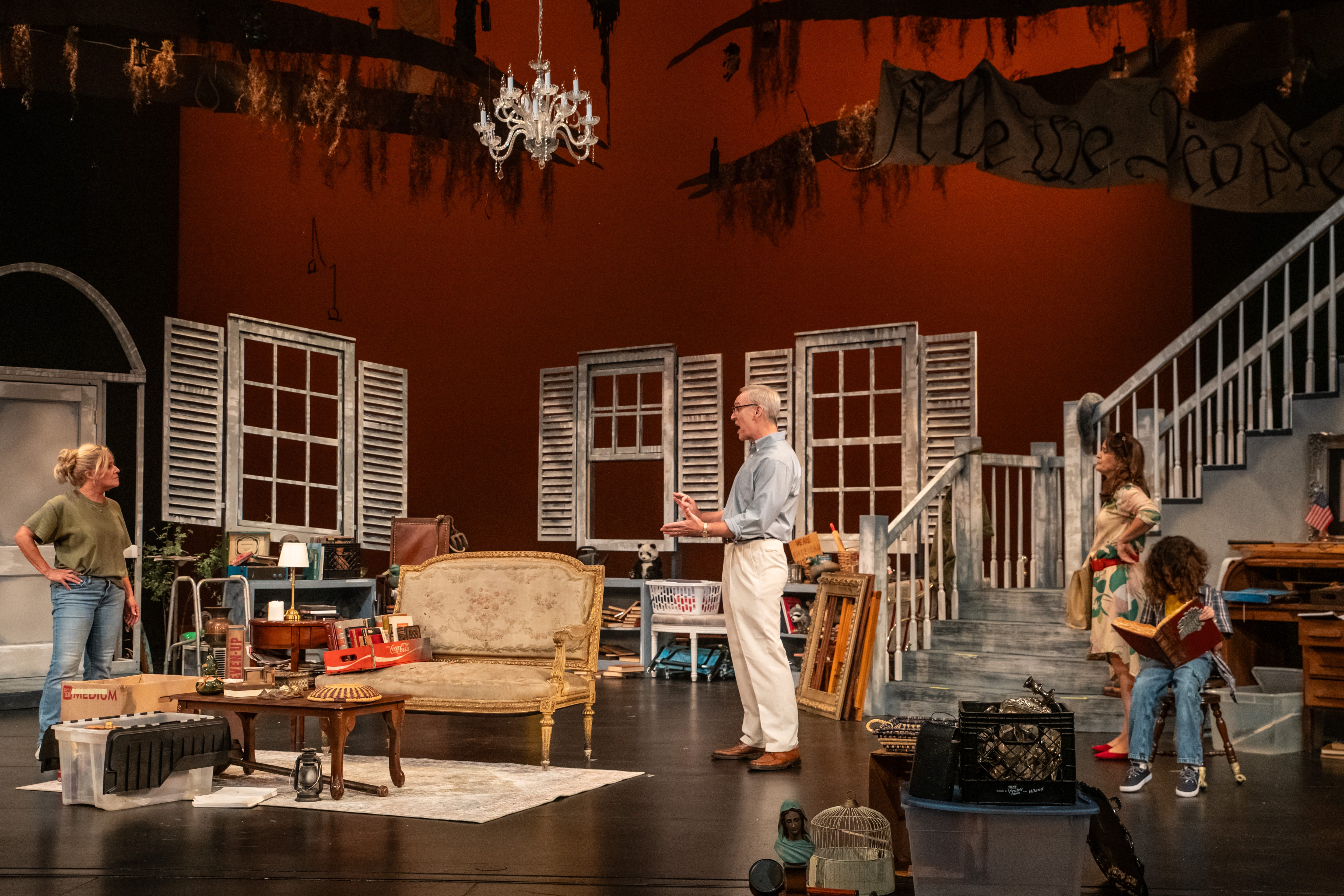
This year, the Tennessee Williams Festival has departed from its usual format for a season based on “The Tennessee Effect”—by which they mean the effect the Williams corpus has had on later generations of playwrights. That includes Branden Jacobs-Jenkins, whose Tony Award-winning drama Appropriate, which runs through September 27, is the powerfully disturbing centerpiece of the new season.
In an interview earlier this month, Benny Sato Ambush, the director of Appropriate, noted that Jacobs-Jenkins “publicly acknowledges the enormous influence that Tennessee Williams as a writer had on him” and that there are “Williams signatures all throughout this play,” which he calls “a southern Gothic tale.” That description couldn’t be more, well, appropriate.
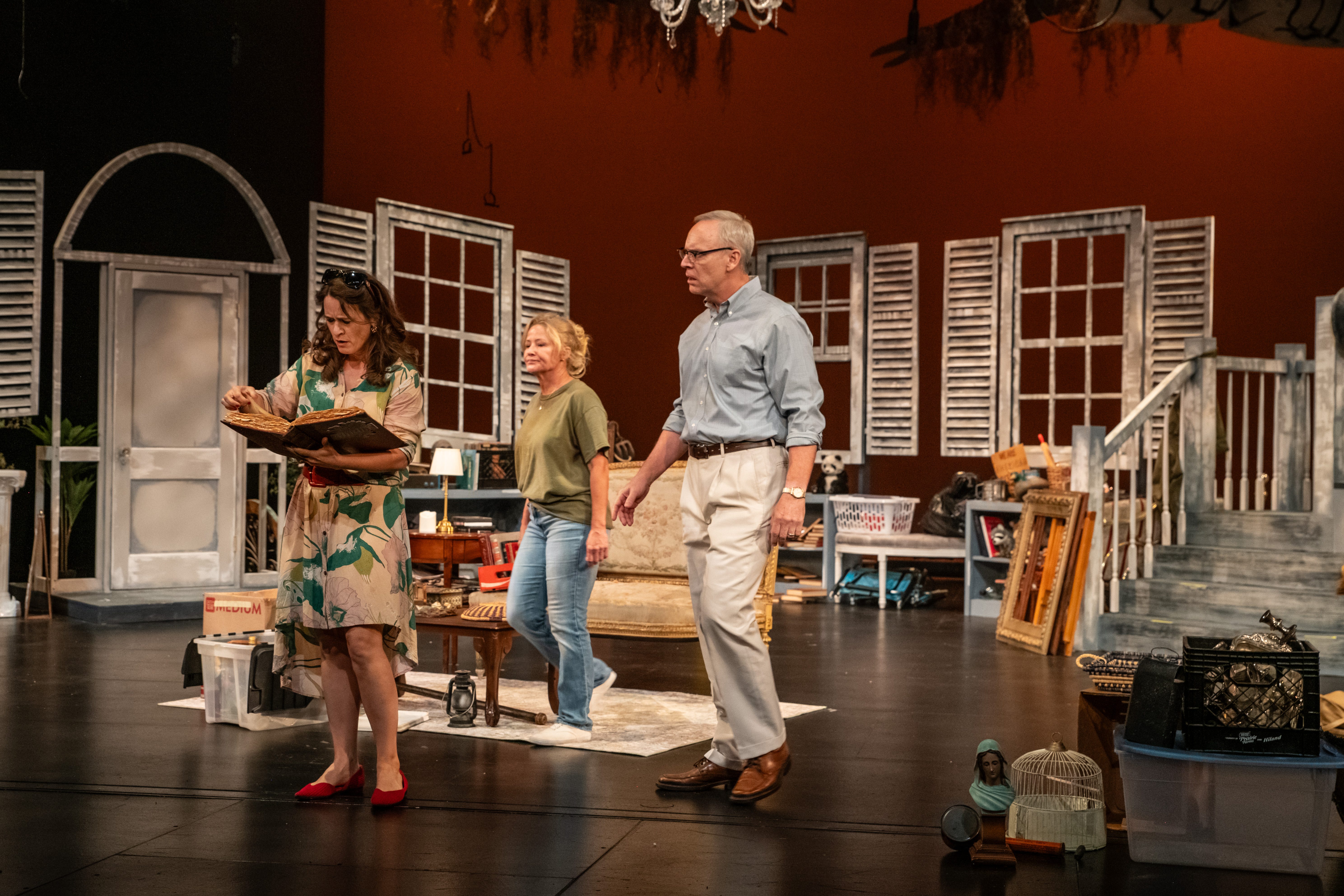
Ambush acknowledges that he didn’t catch the Williams influence when he saw the world premiere of Appropriate at the Humana Festival in 2013, but then neither did I. Looking back at my review from then, I see that I acknowledged the irony of the title since, at one point or another, nearly every character acts in ways that are not appropriate. However, it wasn’t until I had a chance to see the exceptional TWF production and read the 2016 revision of the script that I appreciated the fact that “appropriate” is also a verb. As in: “to engage in appropriation.”
On the surface, Appropriate is about what happens when the Lafayettes descend upon a crumbling Arkansan plantation to liquidate the estate of their late patriarch Ray Lafayette. His three adult children collide over clutter, debt, and a contentious family history. A disturbing discovery among their father’s possessions, though, leads to what the original program called “a series of crackling surprises and confrontations.” Which is putting it mildly.
Not that the Lafayette clan isn’t primed for an explosion to begin with. Resentful that she was left to deal with the family’s increasingly disturbed father and crumbling finances, sister Toni is hostile and judgmental towards nearly everyone—and possibly in denial about their dad’s real nature. Frank (now calling himself Franz as part of his attempt to escape his past) has apparently still not gotten over the unhealthy interest in underage women that made that escape necessary. And Bo, while apparently the most rational of the bunch, is still willing to make a fast buck from a shameful family secret, if only to save them all from financial disaster.
That’s a lot of emotional baggage but, most notably in the first act, Jacobs-Jenkins’s script and Sato-Ambush’s direction never allow it to crush the drama. Exposition is neatly and economically delivered, the characters are all credible and quickly established, and the dramatic tension builds plausibly from the semi-comic opening scenes to the dramatic explosion that results from the revelation that the father of the Lafayette clan might have belonged to a very different Klan as well.
Fortunately, the Lafayettes are not the complete emotional disaster areas that one encounters so often in the plays of Williams. They’re capable of both cruelty and compassion. Their lives may be tragic, but they are never pathetic.
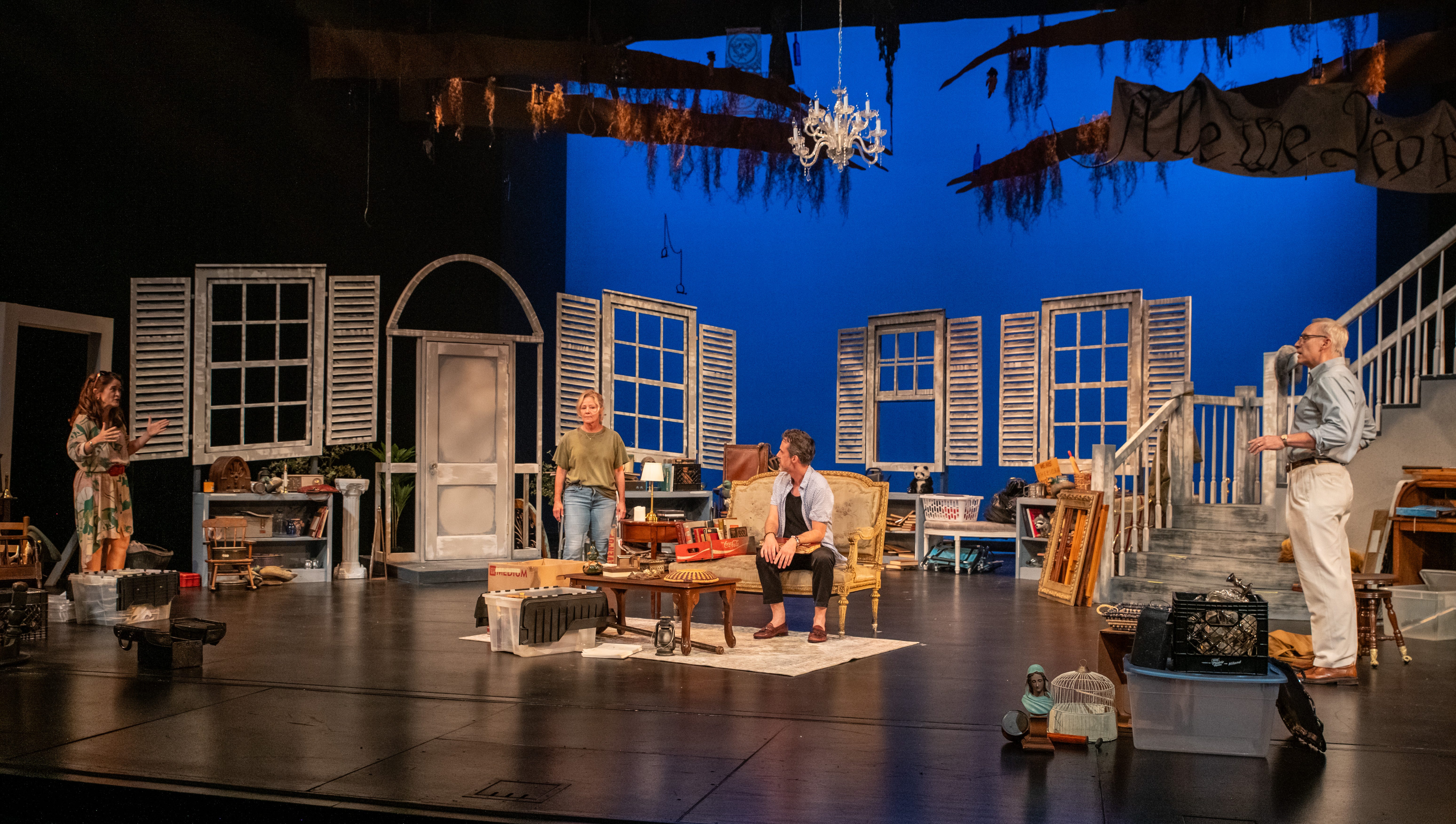
A text this rich calls for an equally accomplished cast—which the Festival certainly has. Michael James Reed is Bo, the middle sibling and apparently the most successful, even if it has limited his relationship with the family mostly to signing checks. Lizi Watt is Bo’s wife Rachael, struggling with her outsider status in the family as well as her teenage daughter Cassie (a notable debut by Ainsley Hammond) and her hyperactive youngest child Ainsley (Aviv Giancola-Porembo, another impressive Festival debut).
Reed captures Bo’s sometimes overbearing self-confidence as well as his hidden self-doubt. Watt’s Rachael is credibly frazzled and, in the final scene, just as credibly compassionate when Bo’s façade finally collapses.
Jilanne Marie Klaus has perhaps the most challenging role as Toni, the oldest Lafayette sib and, as is so often the case, the one who has had the thankless task of dealing first-hand with the family patriarch’s illness and death. Toni is resentful at the sacrifices she has had to make, awkward in her attempts to connect with her taciturn teenage son Rhys (a stolid Braden Phillips) and in terminal denial about the dark side of “daddy” Ray. Klaus makes both her biting sarcasm and her pain very real.
To the extent that Appropriate has comic relief, it comes in the form of youngest son Frank (now calling himself Franz as part of his attempt to escape his hebephile past) and his very much younger (roughly two decades) fiancée River. Frank is a walking airport self-help book, trying to atone for his previous misdeeds while River is almost painfully well-meaning as she tries to aide Frank’s recovery with “New Age” blather.
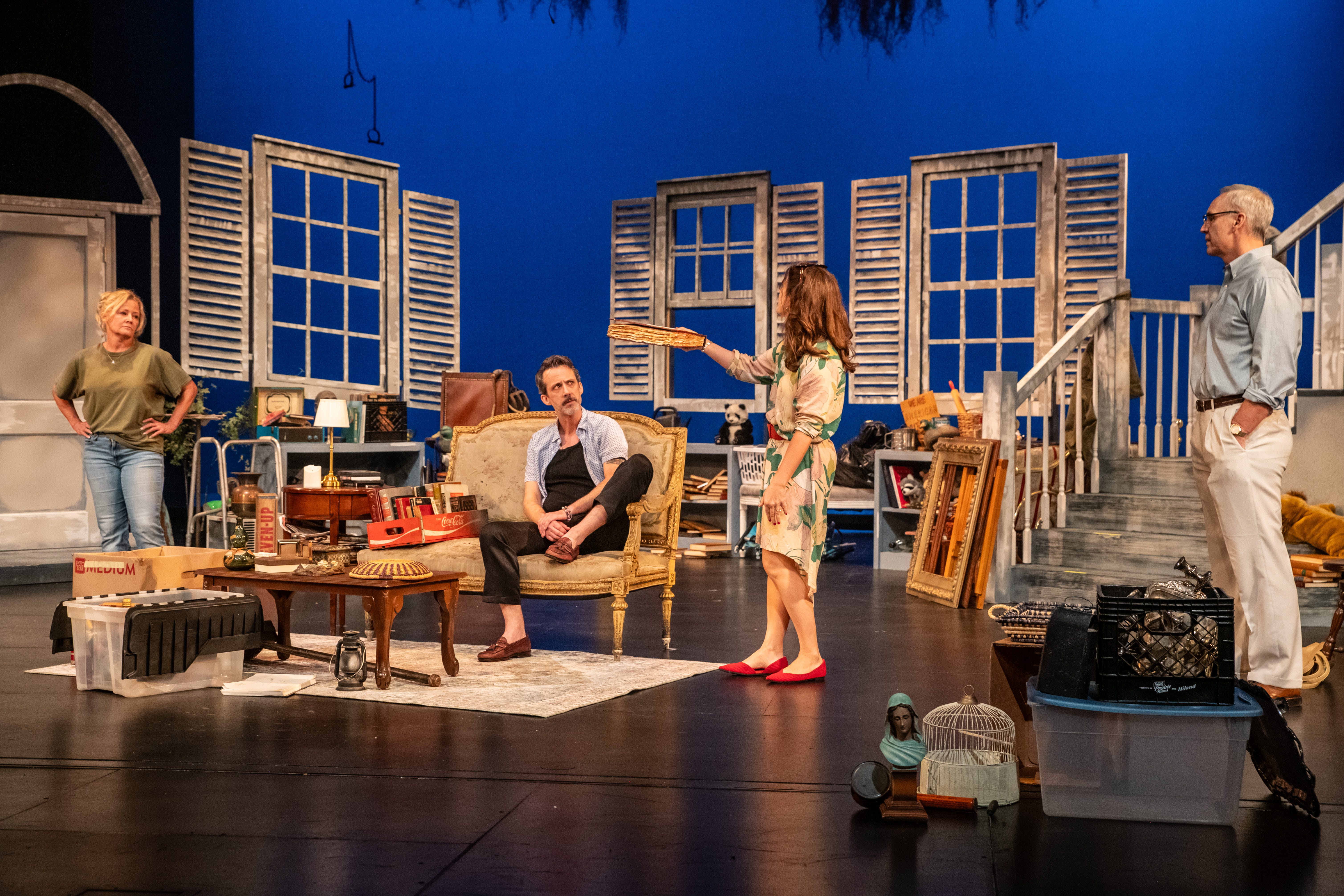
Multiple St. Louis Theatre Circle award winner Joel Moses makes Frank sincere and almost likeable until the ugly reality of his past emerges. Maggie Newstead-Adams infuses River’s trite “wellness” cliches with a sincerity that prevents the character from becoming a joke. Between them, they give Frank/Franz and River an impressive degree of depth.
Ultimately, though, Appropriate is about more than the internecine squabbles of the Lafayette family. Indeed, as the last of them make their exits at the end of the second scene of Act III, little or nothing has been resolved. Even the estate sale that Toni had planned to dispose of the house and its contents has been dropped. That fates of the family and the house are left in limbo.
Until, that is, the third and final scene of Act III. And that requires a bit of explanation.
Each act of Appropriate has a name. In Act I, “The Book of Revelations,” the family is introduced to us along with their dramatic time bombs. Act II is “Walpurgisnacht”—the Medieval night of the “witches sabbath”—and it is, indeed, a bubbling cauldron of emotional conflict. Act III, “The Book of Genesis,” builds to a physical brawl followed by a final revelation from the past (Act I) followed by the aforementioned collapse in Act II.
That brings us to the final scene of the play. In the script, it’s a scene in which the only character is the house itself. In language as poetic as it is unstageable, it begins with a very long sentence ruminating on the meaning of the song of the 13-year cicadas that is heard throughout the play followed by a dozen or so short scenes set on “some day—any day” in which we see the house age and deteriorate until “it is some day – any day – tomorrow – thirteen years from now – twenty-six years from now. It is the future. It is the present. It is any present. Is the past – any past – now.” The Fall of the House of Lafayette is complete. There’s a blackout and in the end even the cicadas are silent.
At the Humana premiere, director Gary Griffin attempted to stage all of that as literally as they could and largely succeeded, at least from a technical POV. The results, however, felt anti-climactic and—without a script in hand—somewhat baffling. Subsequent directors have come up with their own solutions (the recent revival at the Helen Hayes Theatre on Broadway ended with a tree growing out of the floor) but Ambush has come up with the boldest one yet. As he writes in his director’s note in the program (titled “The (Dis)United States of Anxiety”):
The Lafayette family in the play struggles to squarely face a disinterred truth: to name it, assign accountability, reckon with its meaning, square the contradictions, and DO something about it. Our nation sits at a similar crossroads. The family’s legacy mirrors our country’s legacy. Both suffer unresolved karmic dis-ease. Both face a test of their character
In collaboration with scene and lighting designer Matthew McCarthy, Ambush turns the final scene into a historical shadow show in which an American flag slowly deteriorates to the accompaniment of a mix of voices and sounds from the civil rights movement (nicely done by Sound Designer Mary Robinson). Both hope and doom are suggested. “Our national motto, E pluribus unum (out of many, one),” writes Ambush, “remains messy unfinished business.”
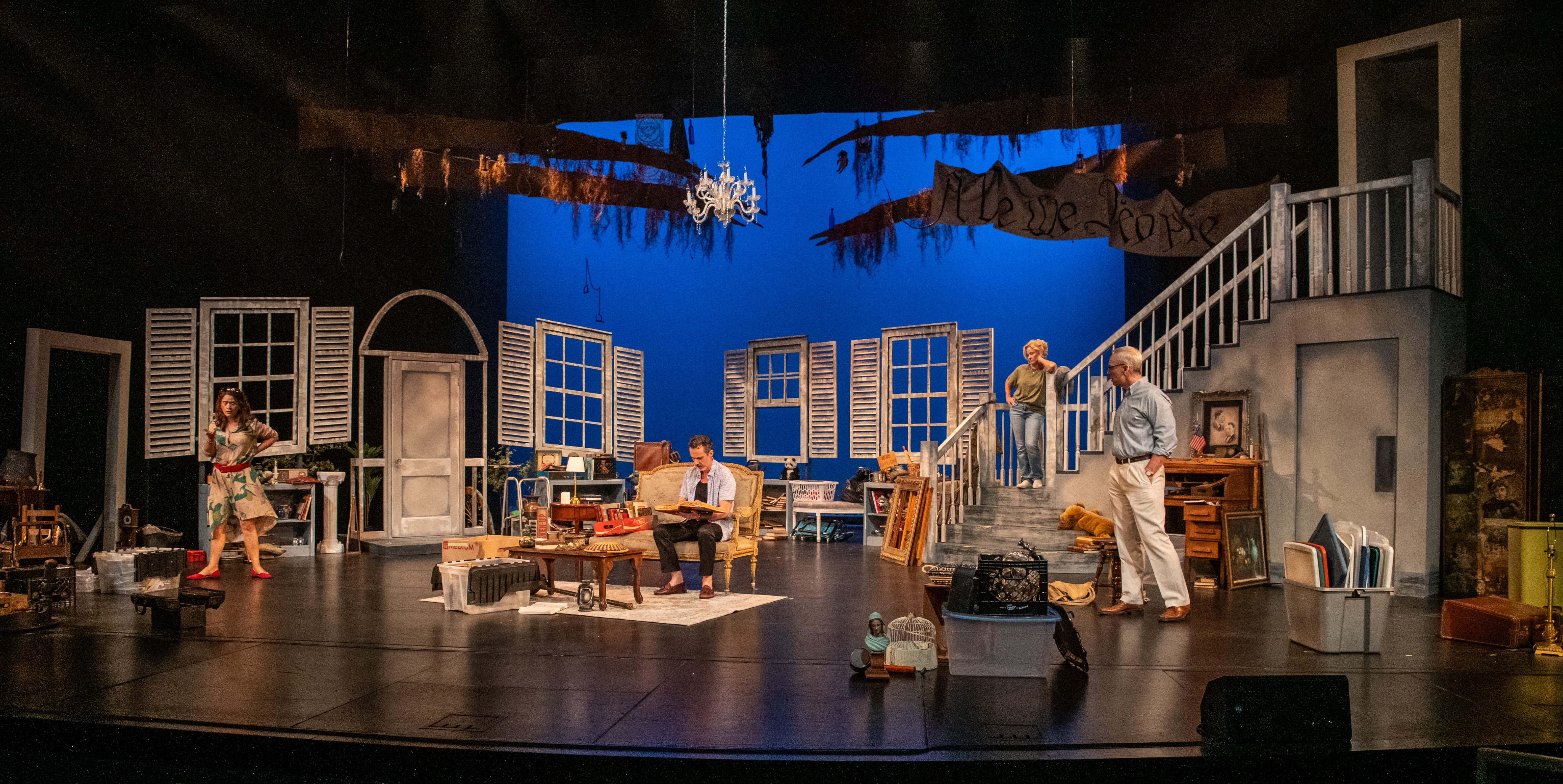
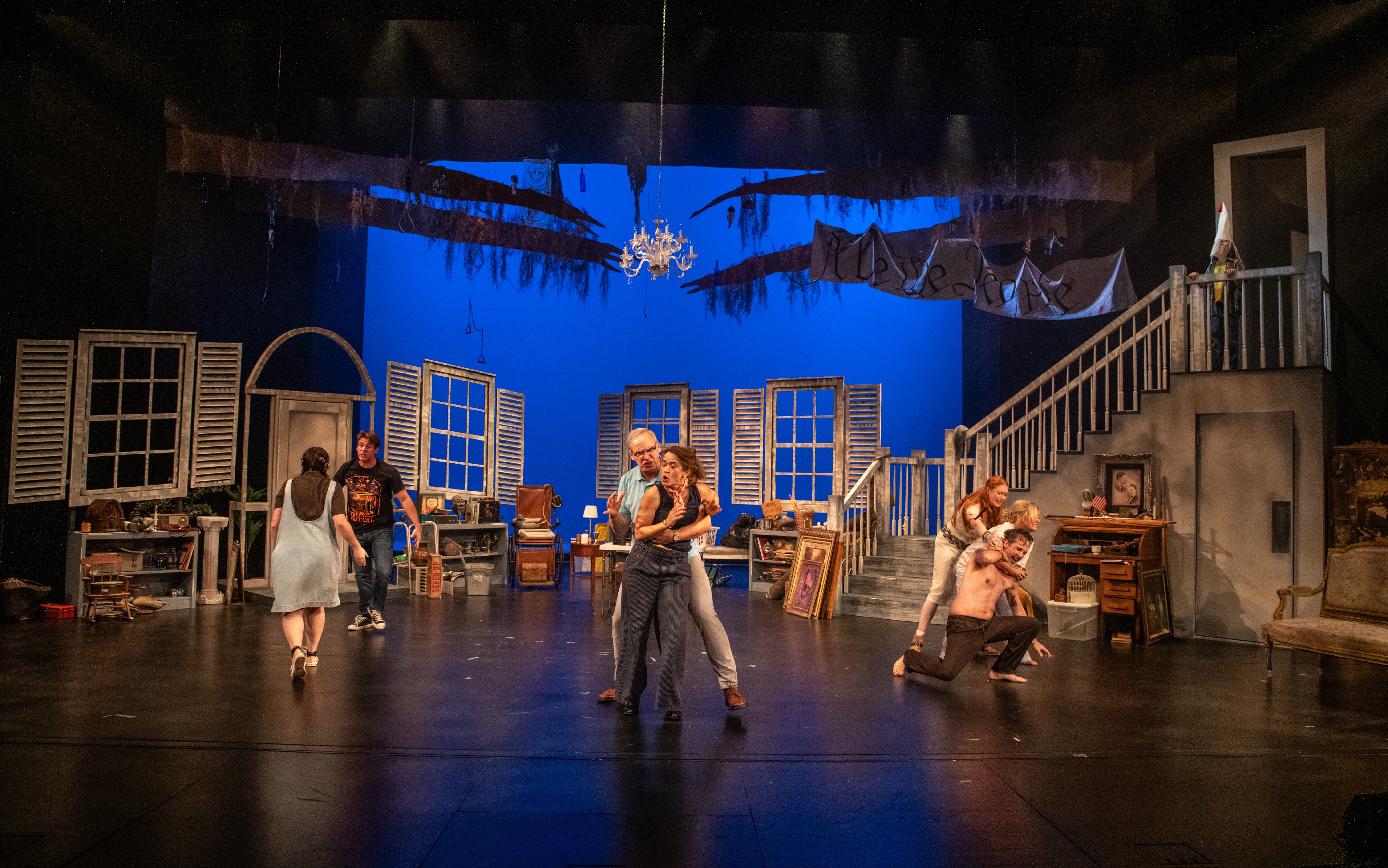
Speaking of which, my business here would remain unfinished if I didn’t devote some pixels of praise for the way McCarthy and Robinson have summoned up the oppressive Lafayette manse without the massive, realistic set that other companies have used. Stand-alone door and window pieces suggest the house while ominous branches (or are they hands?) above drip with moss and the occasional hangman’s noose. A pair of slave shackles and empty liquor bottles are projected on the backdrop. The omnipresent cicada chorus underlies everything, while the occasional unexplained noise suggests the presence of restless spirits.
Kudos also to Properties Designer and Supervisor Mikhail Lynn for the essential clutter of the set and the many props required by the story. Ditto Fight Director Shaun Sheeley for his choreography of the melee that breaks out in Act III.
Appropriate closes its run this Sunday, September 27th. Ticket information is available at the Tennessee Williams Festival web site. It is superbly acted and directed and unnervingly relevant. The challenges faced by the Lafayette family are the challenges we face as a nation. We owe it to ourselves to make better choices than they do.
OK, so the obligatory picking of nits comment, but where admittedly I would have made the same name spelling typo w/o knowing the correct spelling in advance: it's Branden Jacobs-Jenkins, rather than "Brandon" Jacobs-Jenkins. But both spellings sound the same to me, so quite understandable.
I remember reading the NYT reviews at the time of the Broadway production. I can't recall if I could have seen the play then on a NYC trip, but obviously I didn't. In hindsight, I'm glad that this STL festival production was my first time with a live production of this play, rather than NYC. I caught resonances of "August: Osage County" and "The Piano Lesson" in places, in my admittedly limited experience with seeing plays live.